About
Built for the plants that have to live with the machine.
Levra takes a station that is eating operator time, designs a cell around it, builds and programs it in our shop, and commissions it on your floor. Then we hand it over properly.
Why Levra exists
The machine we’d want to inherit.
Levra started after seven years working on automation systems inside production plants, watching the same pattern repeat: the integrator ships an overcomplicated, under-documented machine, the truck leaves, and maintenance is stuck with it. Nobody on site can safely change anything, so the machine slowly becomes something the plant works around.
We build the opposite of that. Labeled wiring, readable code, prints and backups in your hands at acceptance, and a straight answer when automation is not the right move yet.
What that means in practice
- Start from the current reality on your floor, not a theoretical perfect cell.
- Design in phases so you can learn, adjust, and invest with confidence.
- Prioritize maintainability: clear wiring, labeled components, readable code.
- Say so when automation is not the right next step yet.
Who you work with
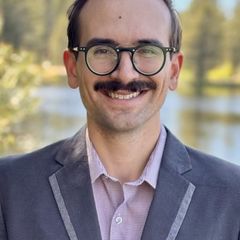
Daniel Whitfield
Founder | Automation & Controls
Before Levra, Daniel spent seven years across medical-device manufacturing, robotics, and factory automation. He founded Levra to build machines the way he thought they should be built: documented, maintainable, and handed over completely. He leads mechanical design, controls, and commissioning on Levra projects.
As project load grows, Levra adds a build technician and a mechanical engineer so every machine gets the focus it deserves. We scale the team to the work, never the other way around — and one team carries a machine from proposal through commissioning.
How we work
Three habits, not three slogans.
Keep it understandable
Well-designed systems are ones other people can follow. We keep architectures and interfaces as simple as the job allows, so your team can work on the machine without us.
Design around operators
Operators live with the machine every shift. Their feedback, habits, and constraints belong in the design rather than patched on after the first complaint.
Give honest answers
If a simpler fix or a manual process is better for now, we say so. Hearing that from us is what makes the next project possible.
Where this is going
Every build makes the next one more predictable.
Levra delivers custom cells and stations. Each project also extends a longer-running effort: a set of reusable foundations that make the next machine faster to build and more predictable to support.
Already in use on every build
- Modular hardware. Controls, motion, pneumatic, and power patterns reused across builds. Detail
- The CODESYS controls foundation. Mode management, fault recovery, job tracking, diagnostics, and operator login under every machine. Detail
- The parts workflow. Every component barcoded, project-tagged, and pulled to a kit before the build starts. Detail
What that compounds into
Each build finds edge cases in the foundation, and the fixes stay in. By the time your project starts, the controls shell, the panel patterns, and the diagnostics are already written and already debugged.
The goal is not off-the-shelf systems. It is making bespoke machines more predictable to design, build, and support — so each new machine starts from a stronger baseline than the last.
Based in Northern Nevada, serving the Sacramento region.
Headquartered in Northern Nevada, serving Reno, Sparks, Carson City, and Fernley. We’re on the Tahoe side, and we’re in the Sacramento area every week — which puts Sacramento, West Sacramento, Roseville, and Rancho Cordova on a standing loop rather than a special trip. We travel for the right project, and if it’s a fit, distance is negotiable.